Why do harbours use huge concrete tetrapods? The engineering behind protection from sea waves
At first glance they look like giant concrete toys scattered along the shore. In fact these unusual structures perform one of the most important tasks in marine engineering — protecting harbours and coasts from the destructive force of waves.
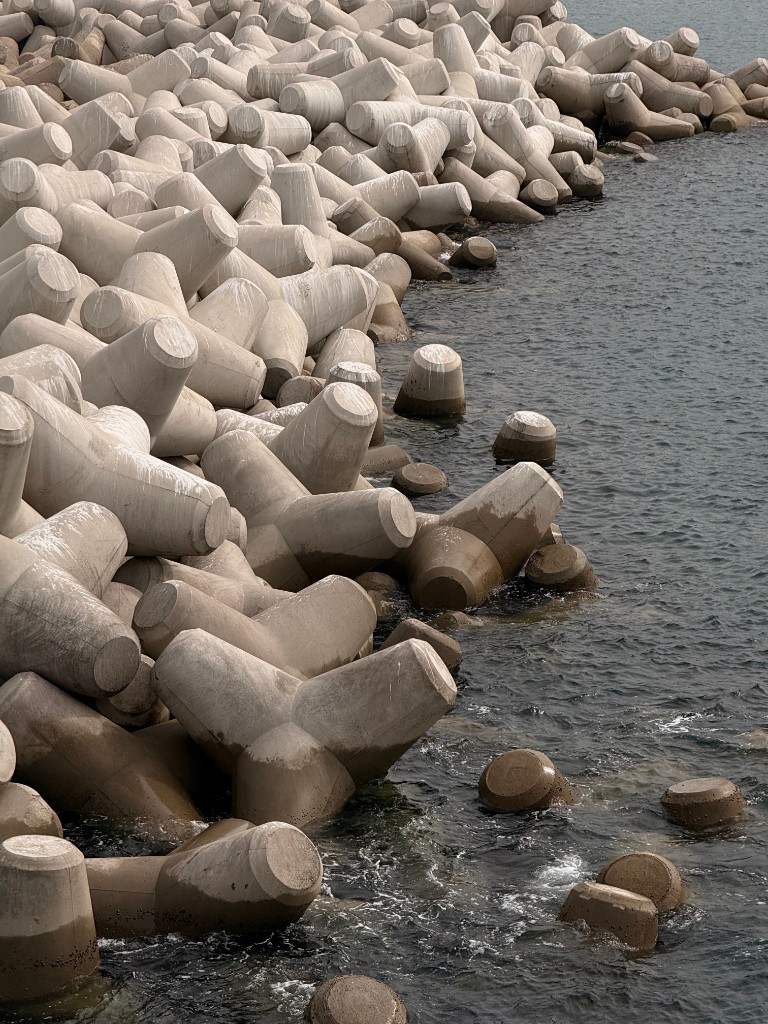
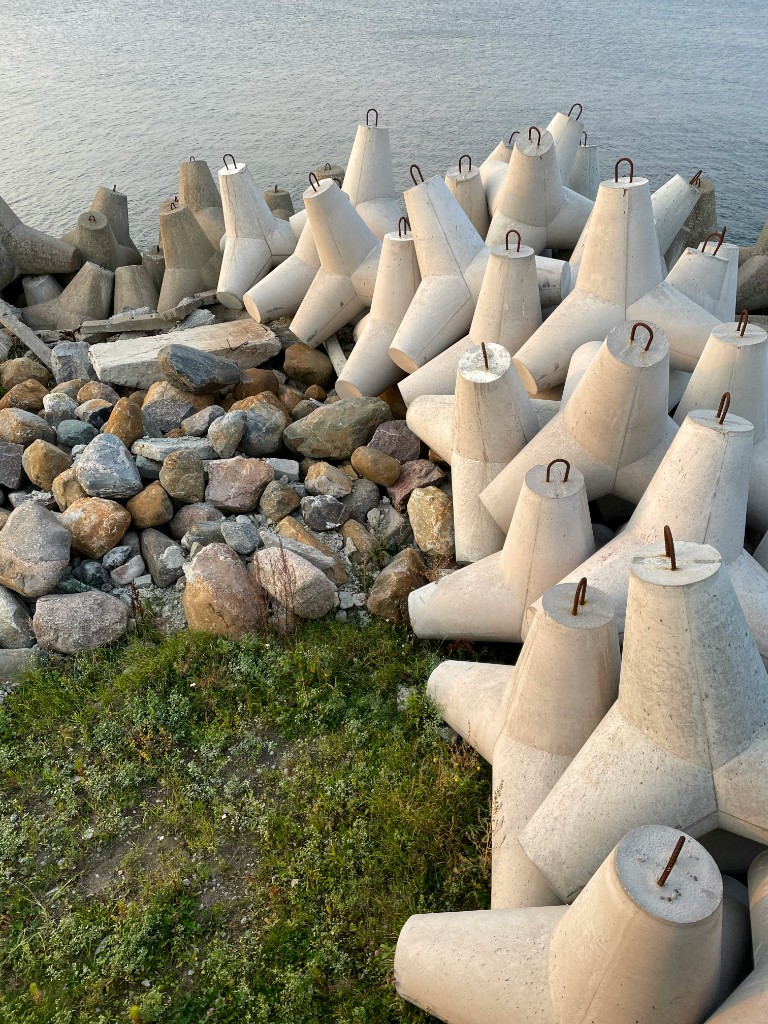
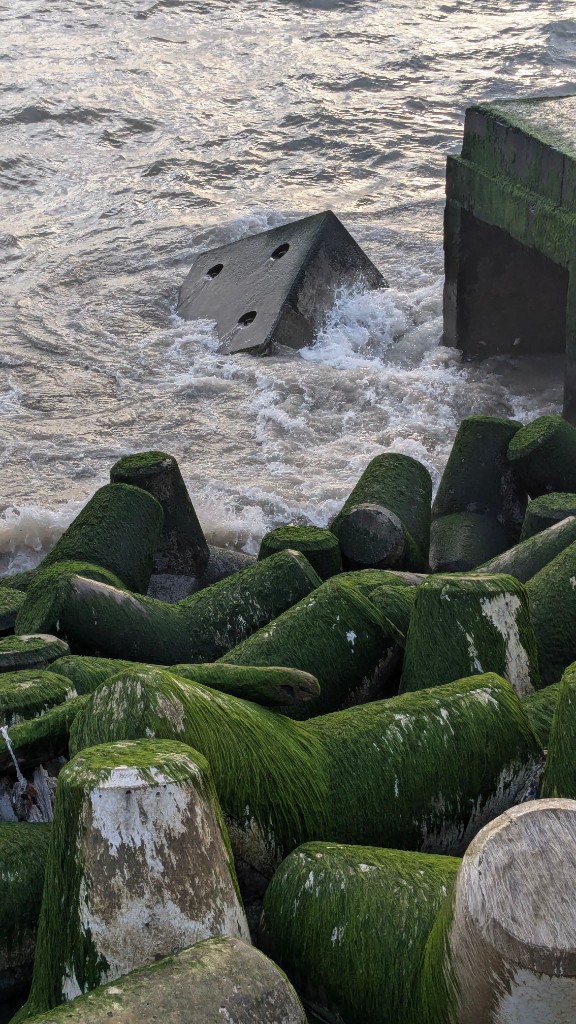
If you have visited a large seaport, you have probably noticed massive concrete units with four legs, stacked one on another near the water.
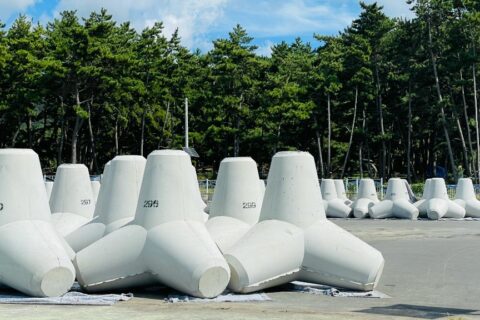
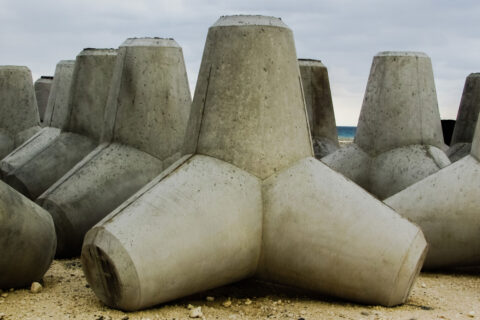
They are called tetrapods and are specially designed for building breakwaters and coastal protection structures.
But why do engineers use such an unusual shape instead of ordinary concrete blocks?
What are concrete tetrapods?
A tetrapod is a massive concrete unit with four legs arranged in space at set angles.
That geometry is not accidental. It allows the individual units to interlock and mutually restrict movement when they sit in the protective layer of a breakwater.
The technology was developed in France in the 1950s and gradually found use in different parts of the world.
Today tetrapods are one of the recognisable symbols of modern coastal engineering.
More on their role in coastal protection is covered in Tetrapods: why they are essential for coastal protection.
How do tetrapods reduce wave force?
When a sea wave hits a smooth vertical wall, a significant part of its energy is reflected or exerts pressure on the structure.
Tetrapods work differently.
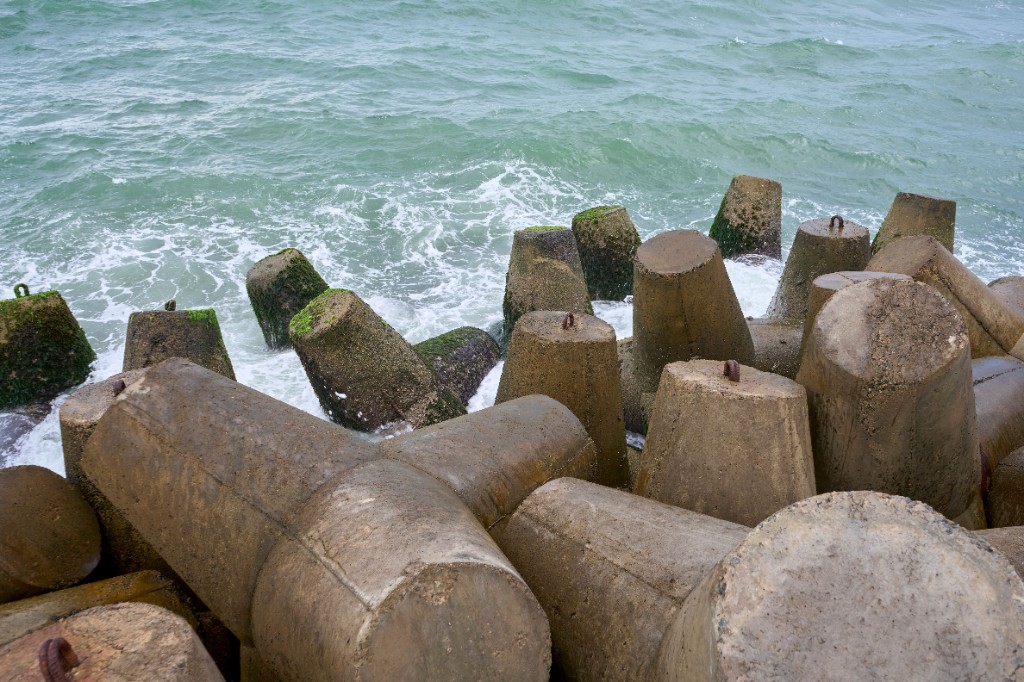
Their irregular spatial shape creates many voids and channels through which water can pass.
Instead of colliding with one continuous surface, the wave is distributed among the concrete units.
That leads to several effects:
- Part of the energy is dissipated through the turbulent movement of the water.
- Concentrated pressure on individual sections of the protective structure is reduced.
- Interlocking between the units supports their resistance to displacement.
- The porous protective layer limits some of the wave reflection.
Tetrapods do not stop the sea — they help wave energy be dissipated in a controlled way.
Why not use ordinary concrete cubes?
Concrete cubes rely largely on their own weight and friction between the units.
Tetrapods also use an additional mechanism — spatial interlocking.
That can allow effective protection with different geometry and amounts of concrete, but it does not mean tetrapods are always the better solution.
The choice depends on wave height, breakwater slope, depth, seabed conditions, and the required stability.
How much does one concrete tetrapod weigh?
Tetrapods can have different sizes and mass according to the engineering design.
For example, with an approximate concrete density of 2.4 tonnes per cubic metre, a unit with a volume of 5 m³ would weigh about 12 tonnes.
On larger structures the individual units can reach tens of tonnes.
Weight alone, however, is not enough. Shape, placement, and interaction between the individual units are essential.
Where are tetrapods used?
Main applications include:
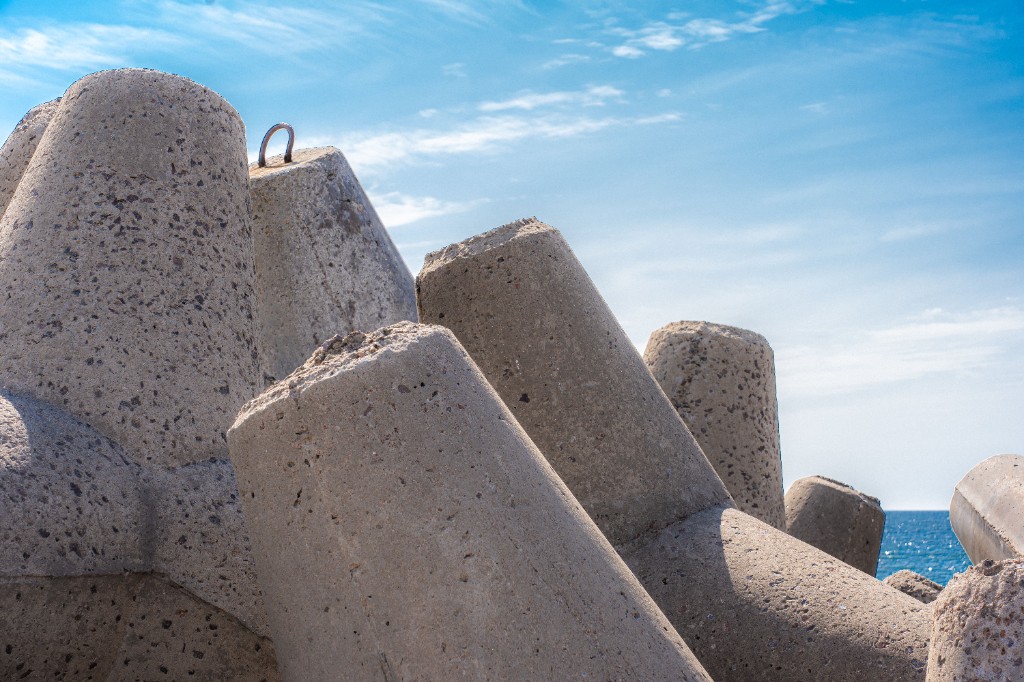
- Harbour breakwaters.
- Protection of sea coasts from erosion.
- Reinforcement of certain coastal facilities.
- Protection of harbour entrances and other infrastructure.
With correct design they can be an important part of the long-term protection of coastal infrastructure.
Why does manufacturing matter?
To perform their function, tetrapods need accurate geometry, the required concrete strength, and suitable workmanship.
Specialised formwork moulds are used for their production, providing dimensional repeatability and scope for series manufacture.
How the process works is also covered in How are concrete tetrapods manufactured and why is their shape so important?
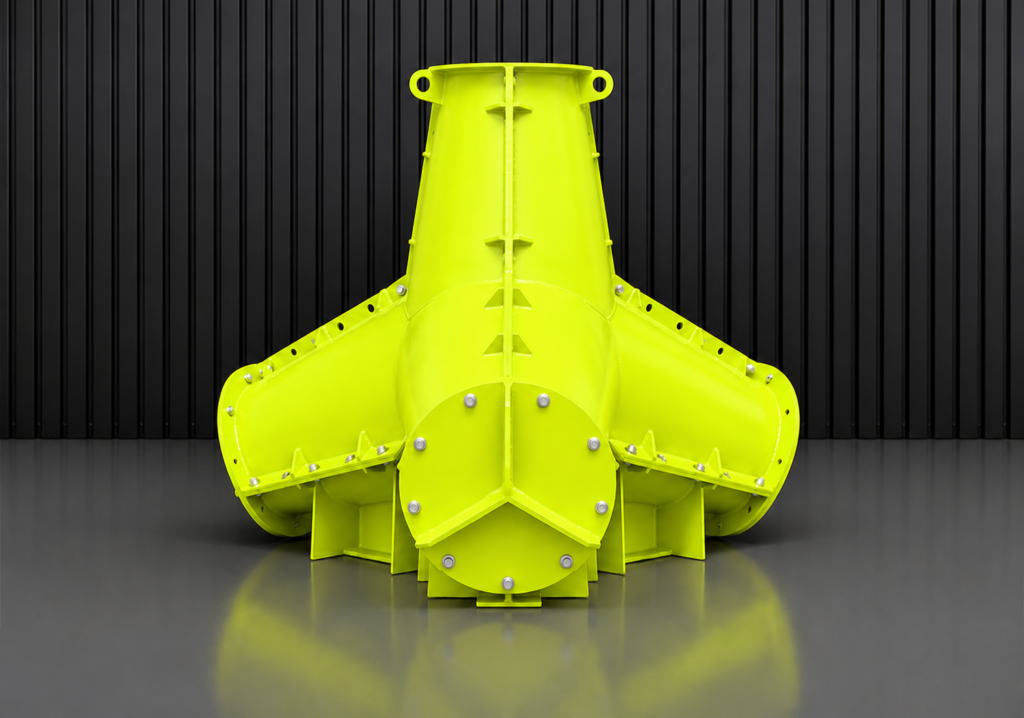
TETRAX offers engineering solutions related to concrete tetrapod production, and specialised steel moulds are an important part of the process.
Because behind a concrete structure that looks unusual at first glance sits precise engineering that helps protect harbours, infrastructure, and coastal areas.