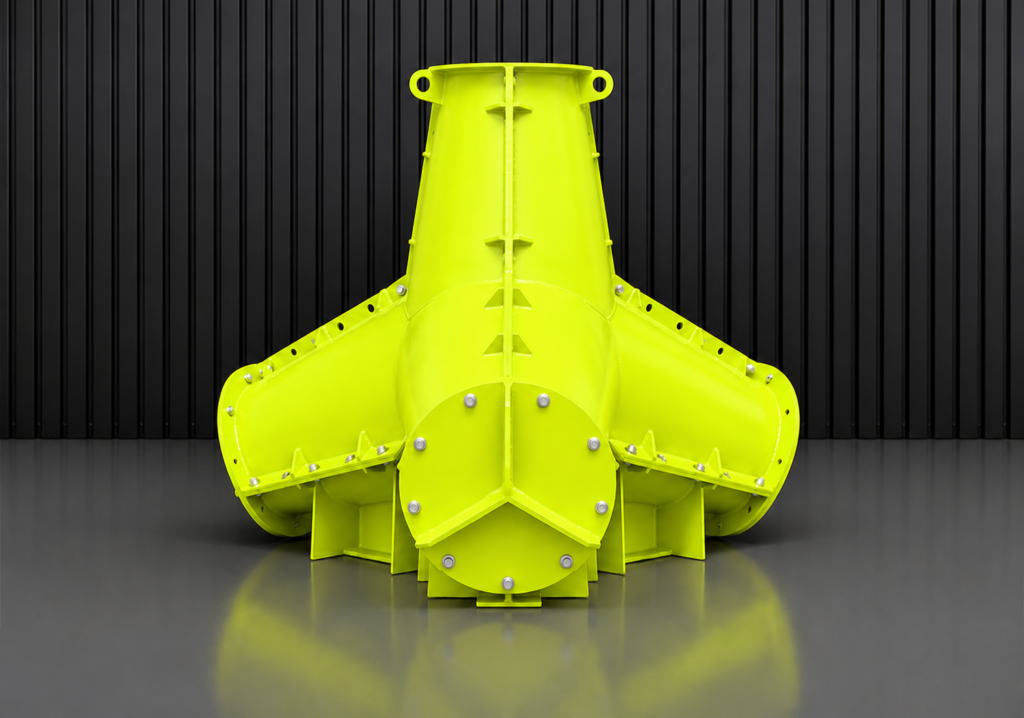
Tetrapods: The Key to Effective Coastal Protection
Tetrapods are innovative four-legged concrete structures that dissipate wave energy and protect coastlines, ports, and critical infrastructure.
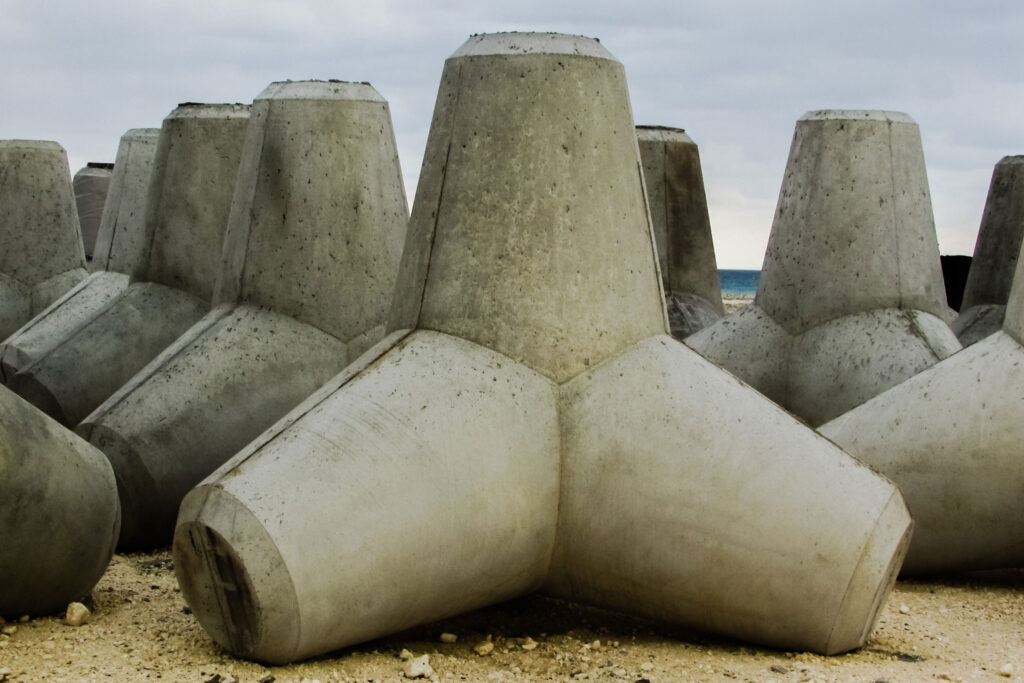
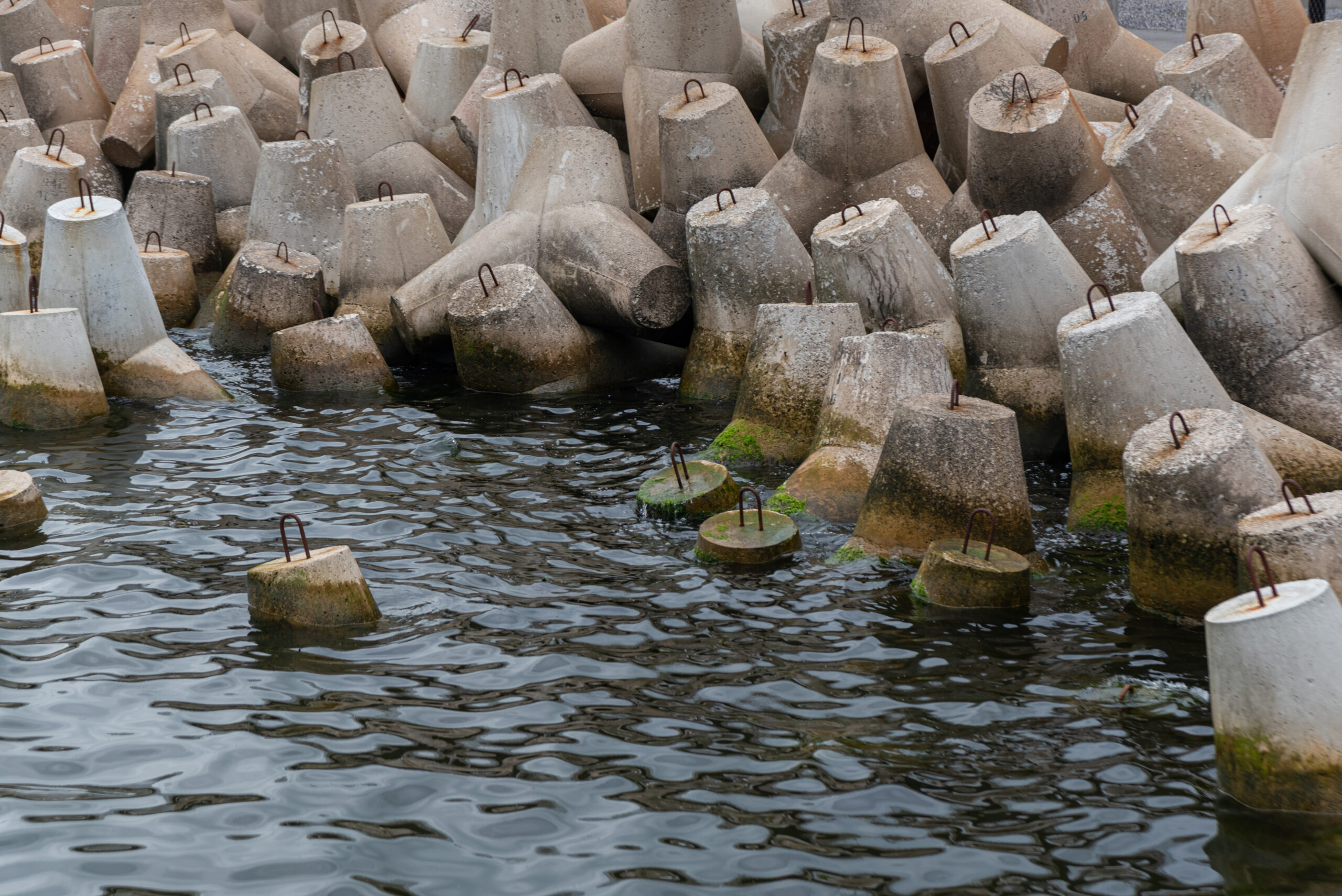
A tetrapod is an innovative four-legged concrete unit that protects coastlines through two core principles:
Energy dissipation: When a wave hits a tetrapod barrier, it does not collide with a flat, rigid wall. Water flows through a complex “mesh” of concrete branches, forcing the wave to break and lose most of its kinetic energy before reaching land.
Interlocking (self-locking): Tetrapods are placed in groups. Thanks to their specific geometry, they lock into each other and form a porous yet extremely stable structure. The stronger the waves, the more tightly they compact under their own weight and water force.
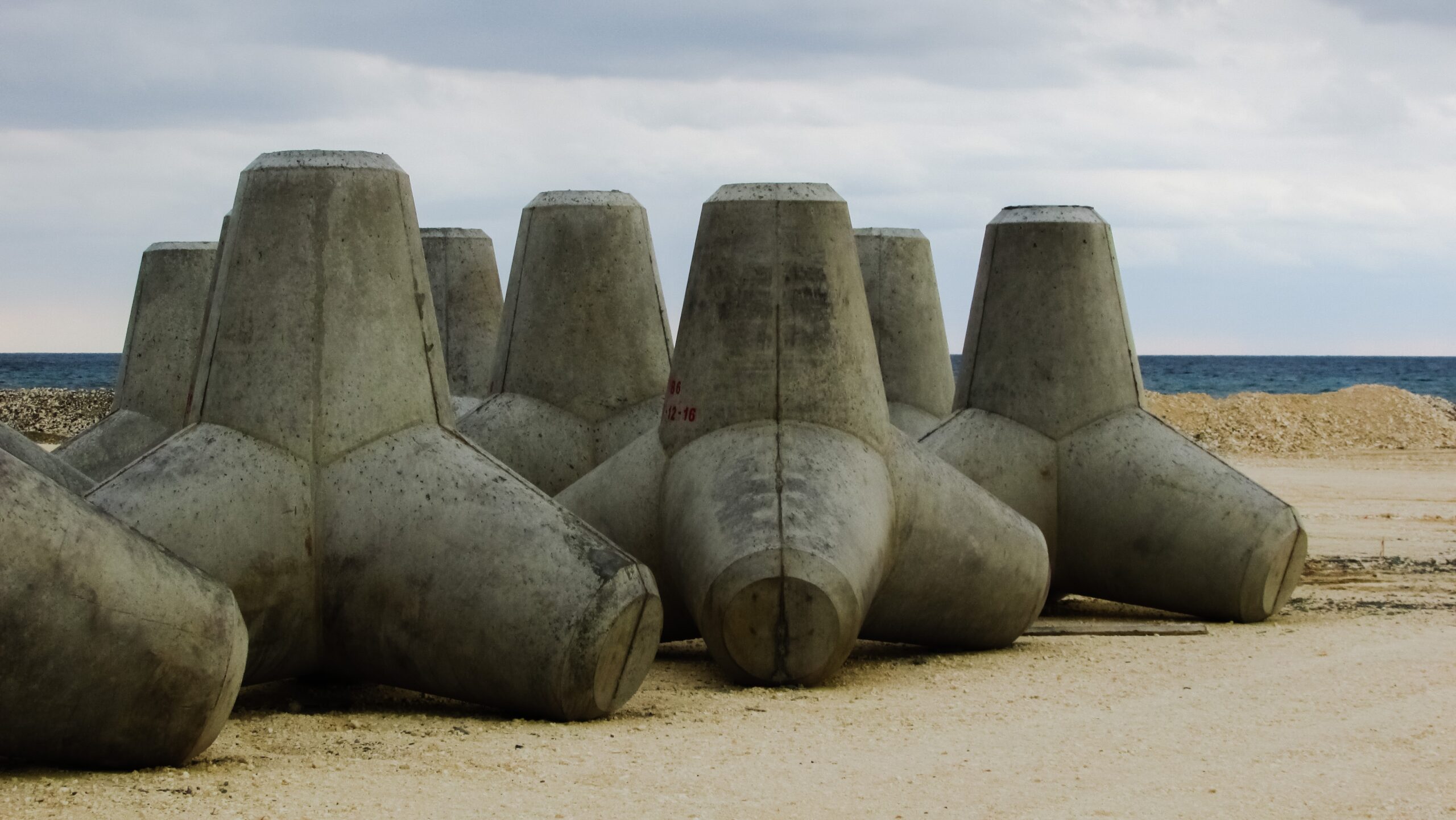
Why are they key to coastal protection?
Coastal erosion is a constant global challenge. Without adequate protection, waves carry away sand, undermine critical infrastructure (roads, quays, buildings), and irreversibly change coastal terrain. Tetrapods address this through several advantages:
Reduced reflected wave impact: Traditional vertical walls reflect waves back to sea, which causes dangerous scouring at their own foundations. Tetrapods absorb and break down wave force, preventing this destructive effect.
Port protection: They are a vital element in breakwater construction, creating calm harbor waters for vessels even under severe weather conditions.
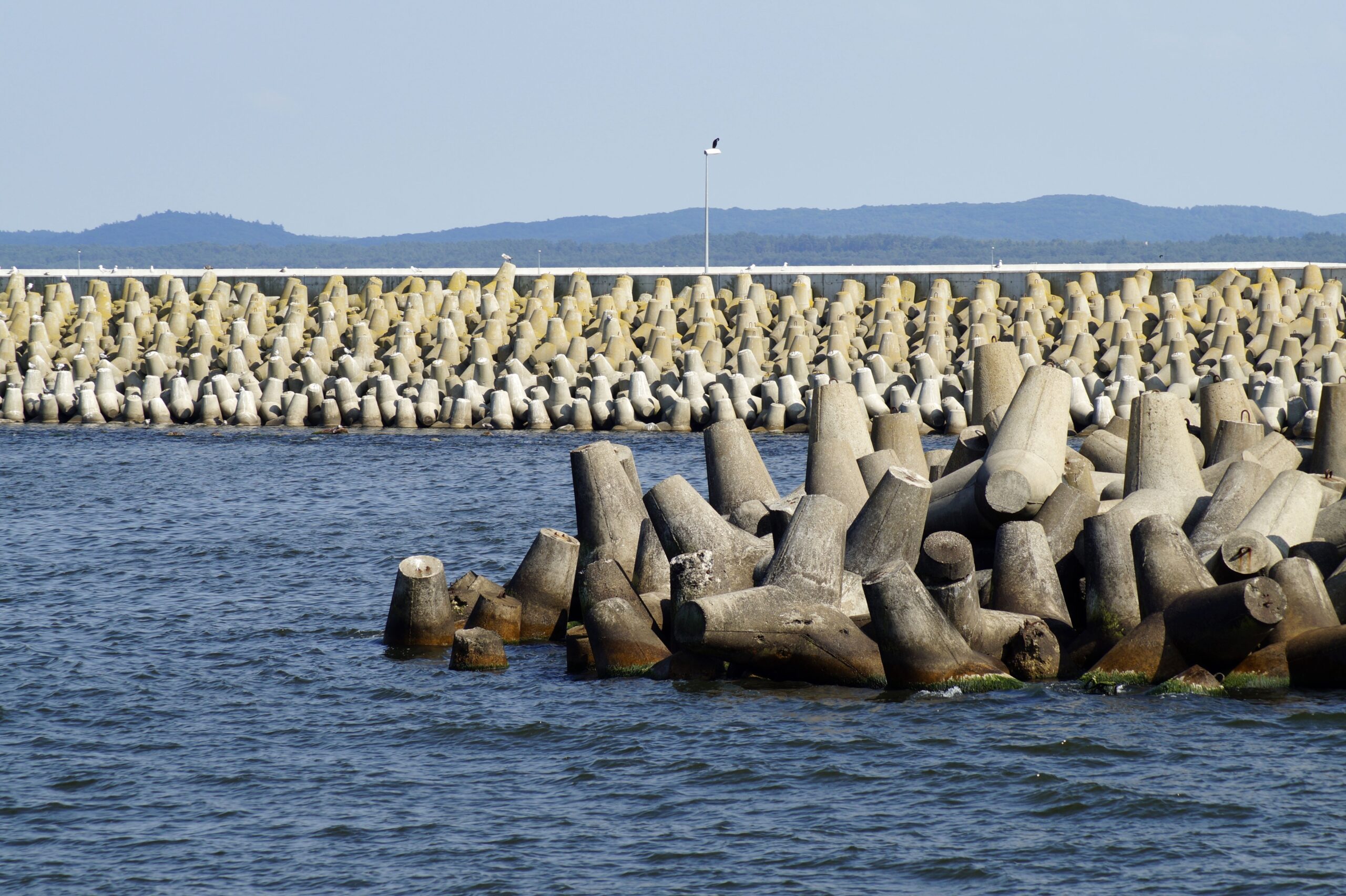
Where are they used?
- Breakwaters and quays: Their most common use — blocking storm waves from reaching port terminals.
- Shoreline stabilization: Used in critical areas where coastlines are highly vulnerable to collapse or washout.
- Infrastructure protection: Installed around bridge foundations, offshore platforms, or artificial islands exposed to open water.
Comparison with traditional solutions
| Characteristic | Traditional concrete walls | Large rock blocks | Tetrapods |
|---|---|---|---|
| Durability | Prone to cracking and collapse | Easily displaced in strong storms | Extremely high |
| Wave energy handling | Reflect energy back | Partially absorb energy | Maximum dissipation |
| Maintenance | Expensive and complex repairs | Requires regular replenishment | Minimal maintenance |
| Flexibility | Rigid, vulnerable structure | Depends on stone size | Self-locking system |
Key benefits at a glance
- Material efficiency (less concrete): Due to their porous structure, tetrapods occupy larger effective volume with less material compared to a monolithic wall of similar performance.
- Long service life: Once installed, they can perform for decades without significant human intervention.
- Ecological niche: Tetrapod surfaces quickly become habitats for marine organisms (mussels, algae, small fish), acting as an artificial reef that supports local ecosystems.
Interesting fact: Every side of a tetrapod is designed with mathematical precision. When deployed in large quantities by crane into the water, the units “self-arrange” into a stable formation. This removes the need for precise and hazardous manual diver positioning.