How are concrete tetrapods manufactured and why is their shape so important?
Four legs, massive weight, and complex geometry. How are the concrete units that protect harbours from sea waves made?
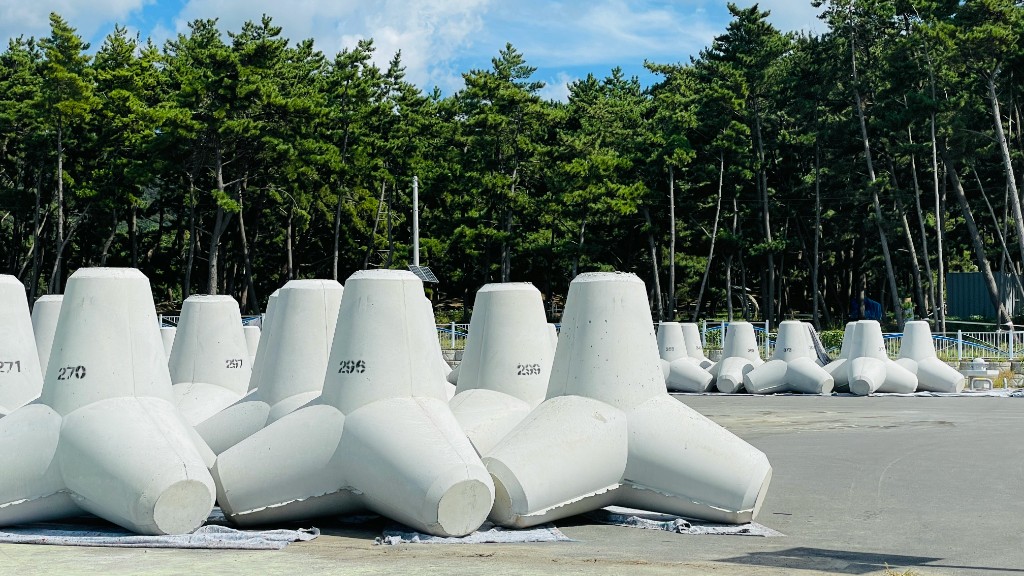
Concrete tetrapods are among the most interesting engineering solutions in coastal construction.
Although they may look like relatively simple concrete structures, manufacturing them requires precision, correctly selected materials, and specialised equipment.
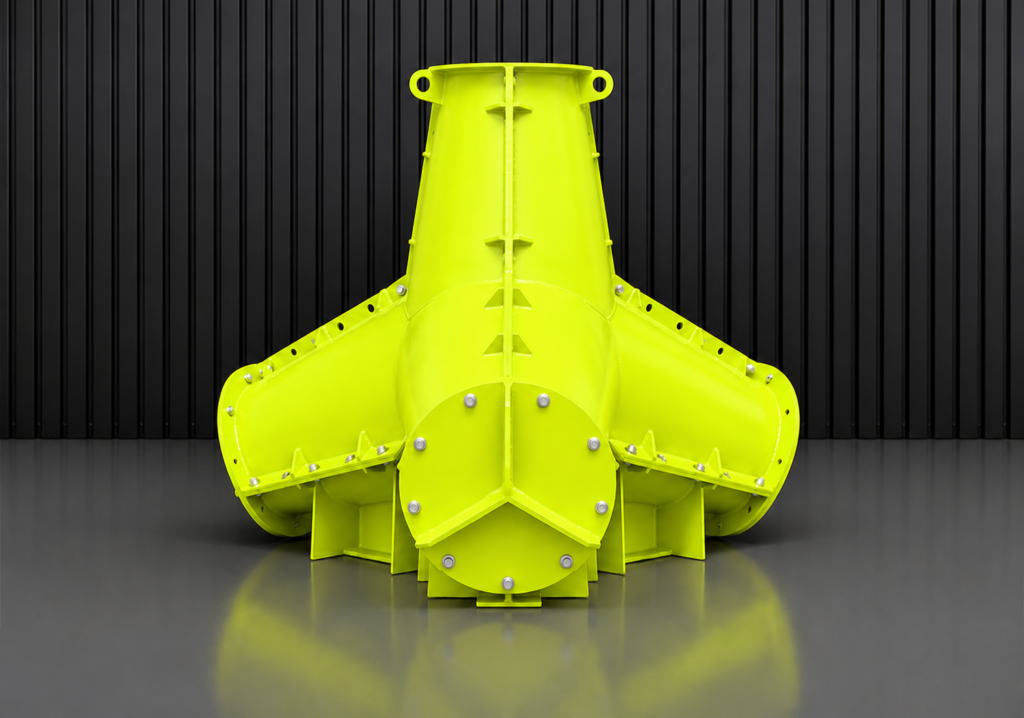
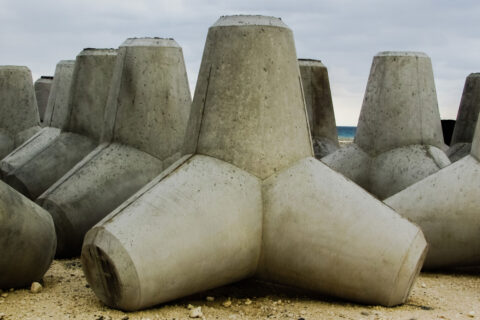
The most important feature of a tetrapod is its shape. That shape determines how the individual units interact with each other and with sea waves.
Why does a tetrapod have exactly four legs?
The four legs are arranged in space so they create a stable geometry and the ability to interlock.
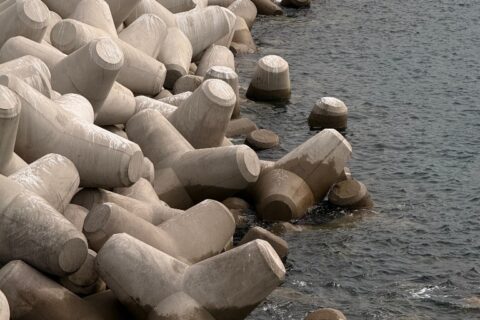
When many tetrapods are placed in a protective layer, spaces remain between them through which water can pass.
That allows part of the wave energy to be dissipated while also supporting the stability of the structure.
Unlike ordinary concrete blocks, tetrapods do not rely only on their own mass.
Their effectiveness is based on the combination of weight, shape, friction, and interlocking.
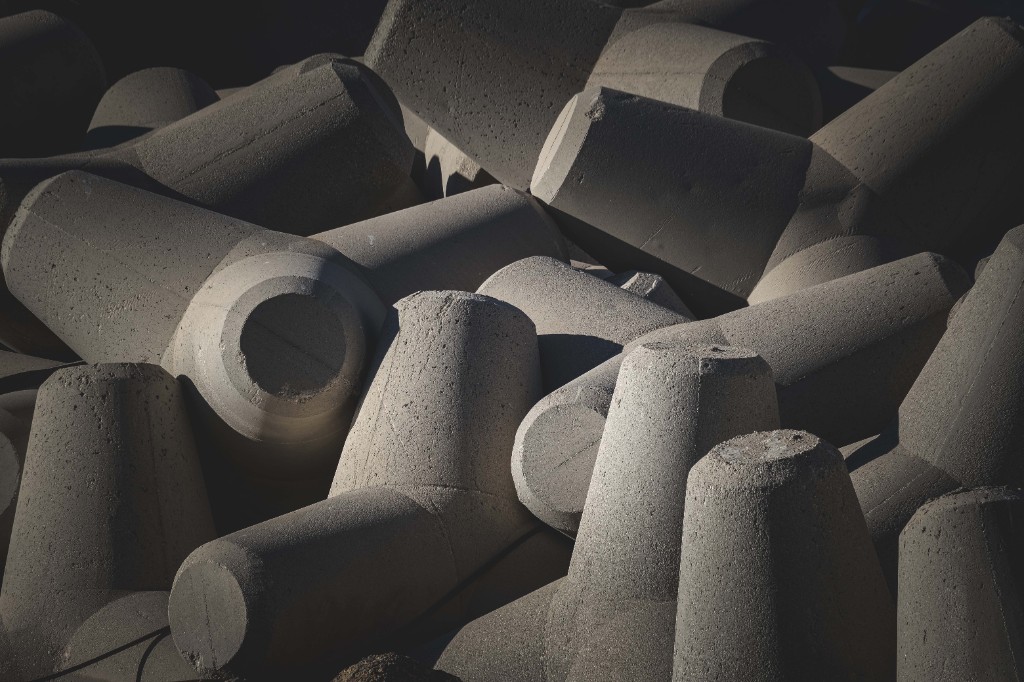
More on their role in coastal protection is covered in Tetrapods: why they are essential for coastal protection.
How is a concrete tetrapod manufactured?
The production process includes several main stages.
Stage 1. Designing the formwork mould
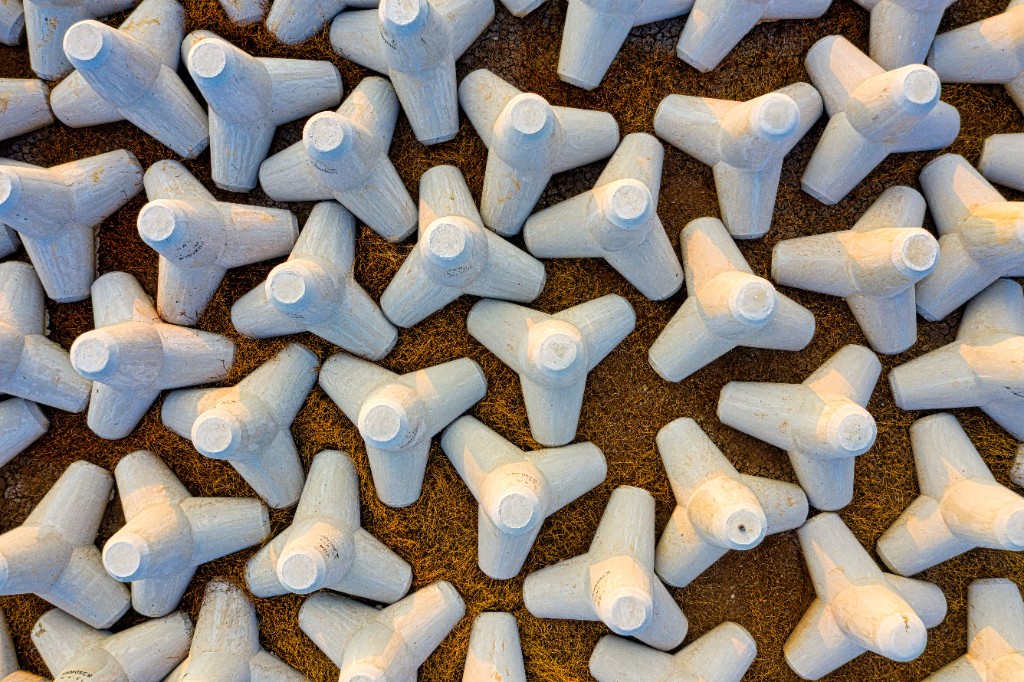
The first step is making a specialised mould that reproduces the tetrapod geometry.
Metal formwork is usually used, designed so it can be assembled, dismantled, and reused many times.
Mould accuracy is critical, because it determines the dimensions and geometry of the finished unit.
Stage 2. Preparing the mould
Before casting, the mould is cleaned, checked, and treated with a suitable release agent.
The individual sections are assembled and fixed so they can withstand the pressure of fresh concrete.
Stage 3. Pouring the concrete
Concrete with the composition and characteristics set by the engineering design is placed in the prepared mould.
Depending on the technology, suitable compaction is used to limit air voids and achieve the required density.
Stage 4. Curing and strength development
After casting, suitable curing conditions must be provided.
Temperature, moisture, and curing time affect strength development and the durability of the concrete.
The formwork is removed only after the strength needed for safe demoulding has been reached.
Stage 5. Demoulding and quality control
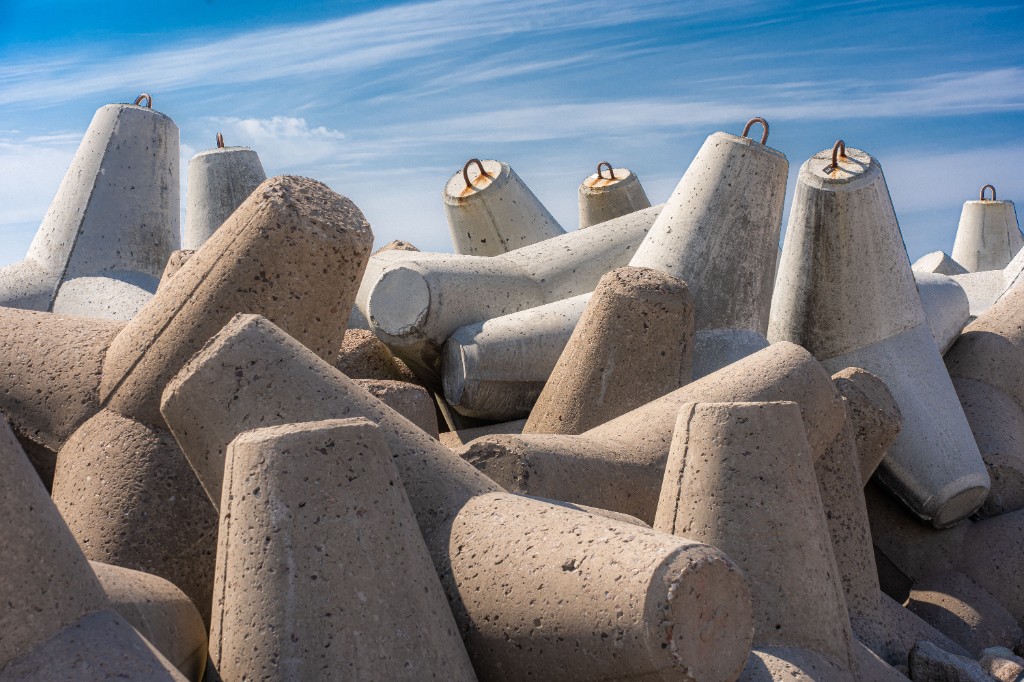
The metal sections are carefully dismantled, and the finished unit is checked for geometric deviations, cracks, and other defects.
After the strength required for transport and installation is reached, the tetrapod can be moved and prepared for use.
Why is mould quality so important?
In series production the same metal mould can be used many times.
That means its design directly affects productivity, accuracy, and the cost of the finished concrete units.
A quality mould should provide:
- Accurate reproduction of the geometry.
- Resistance to the pressure of fresh concrete.
- Easy and safe assembly and dismantling.
- Scope for repeated use.
- Convenience in cleaning and maintenance.
A poorly designed mould can make demoulding harder, increase production time, and lead to defects in the finished units.
Why must tetrapods be placed correctly?
Manufacturing is only one part of the process.
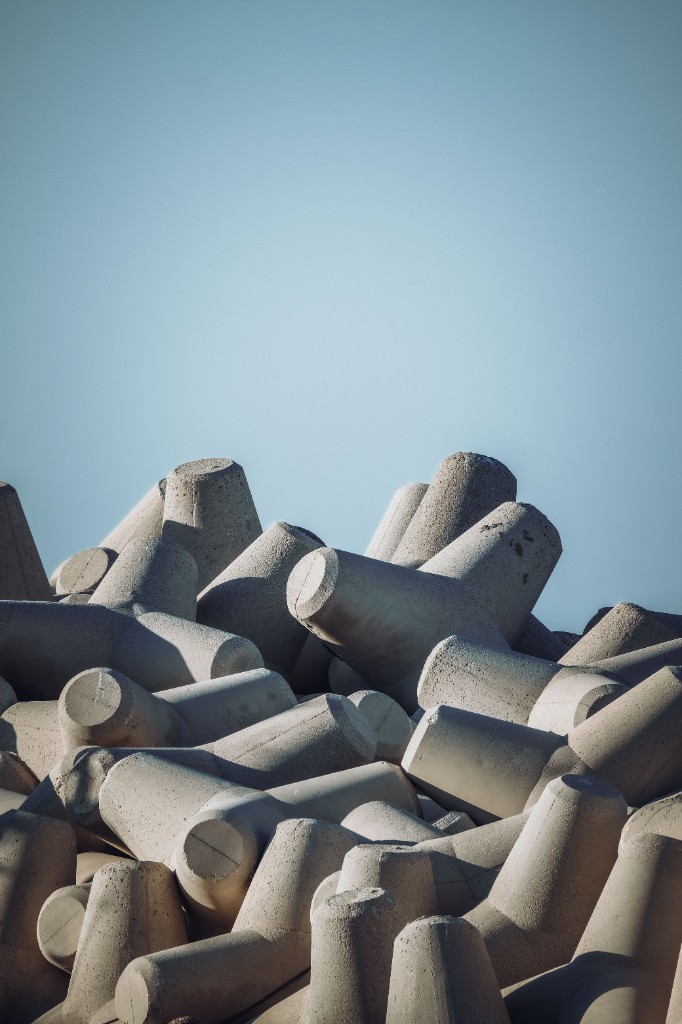
After transport, tetrapods are arranged according to a predetermined layout on the protective structure.
Their position must provide the required interaction between the individual units and the design resistance to wave action.
Incorrect placement can reduce the effectiveness of the protective layer, regardless of the quality of the concrete units themselves.
What is TETRAX’s role?
Producing massive concrete units requires reliable metal formwork systems designed for repeated use.
TETRAX offers specialised steel moulds for manufacturing concrete tetrapods, matched to the required sizes, geometry, and process requirements.
A correctly designed mould supports efficient production and the repeatability needed for the finished units.
TETRAX — engineering solutions that turn complex structures into reliable production processes.