Where to dispose of construction waste and what are the rules in 2026?
The renovation is finished, but what happens to tonnes of concrete, bricks, plaster, and other building materials? Learn where they can be handed in legally, what the requirements are, and how to avoid unnecessary costs.
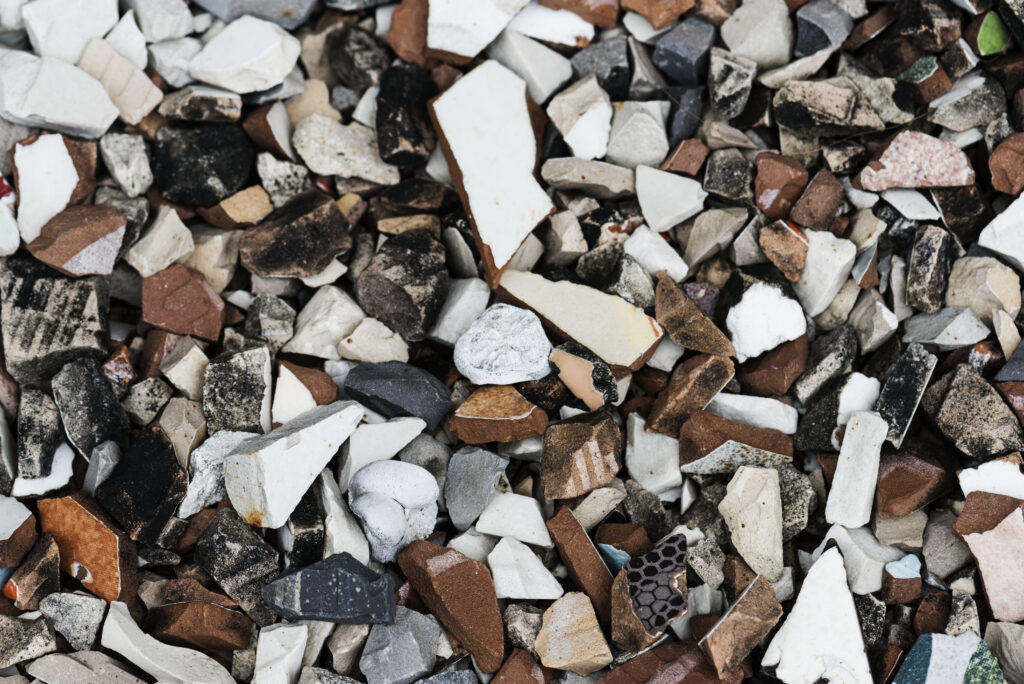
Every year, construction and renovation generate huge amounts of waste. Some of it can be recycled and reused, but improper disposal creates serious environmental problems.
Did you know that construction waste cannot simply be thrown into an ordinary household waste bin?
In Bulgaria, its collection, transport, and treatment are regulated by the Waste Management Act, the specialised ordinance on construction waste, and the relevant municipal rules.
1. What counts as construction waste?
Construction waste arises from building, repairing, reconstructing, or demolishing buildings and facilities.
The most common types are:
- Concrete, bricks, roof tiles, and ceramic products.
- Plasters, screeds, and plasterboard.
- Metal profiles and reinforcement.
- Timber, joinery, and glass.
- Asphalt, stone, and other materials from construction work.
It is important to know that not all construction waste is treated the same way. For example, materials containing asbestos or other hazardous substances require a specialised collection and handover procedure.
2. Where can construction waste be disposed of legally?
Depending on the quantity, the type of waste, and the rules of the municipality, there are several options.
For small home renovations
Some municipalities organise collection of limited amounts of construction waste from households on a set schedule.
For example, in Sofia waste from small home renovations may be left next to the household waste containers within the period set for the area, without obstructing traffic. It must not be placed inside the containers.
For large renovations and construction sites
The usual solution is a specialised container delivered to the site and later removed by a company with the documents required under the Waste Management Act.
When transporting it yourself
Waste can be handed in at regulated sites that accept the relevant material. Before visiting, check the conditions, opening hours, and any fees.
In Sofia, one option is the Vrazhdebna site, listed by the Sofia Inspectorate for accepting certain construction waste.
3. What are the rules, and who is responsible?
The law prohibits unregulated dumping of construction waste, including in nature, by roadsides, on vacant land, and in household waste containers.
When organising construction and renovation work, several main principles should be followed:
- Proper collection — waste must be stored so it does not scatter or pollute the environment.
- Separation by type — where applicable, concrete, metals, timber, and other materials are collected separately so they can be recovered.
- Regulated transport — operators with the documents required for the activity and waste type are used.
- Handover at an authorised site — waste must reach a facility that is allowed to accept it.
Certain construction activities also require additional documents, including a construction-waste management plan when applicable.
Failure to follow the rules can lead to sanctions, whose size depends on the specific breach and the applicable regulation.
4. What container is needed for construction waste?
This is one of the most important questions when organising a construction site.
Containers differ by capacity, structure, permitted load, and transport method.
| Type of waste | What matters when choosing |
|---|---|
| Concrete and bricks | High load rating and a robust structure |
| Metal scrap | Reinforced walls and floor according to the load |
| Timber and joinery | Enough volume for bulkier materials |
| Mixed construction waste | Suitable volume and scope for later sorting |
Important detail: 8 cubic metres of waste does not mean 8 tonnes.
For example, 1 m³ of crushed concrete can weigh roughly 1.5 to 2 tonnes depending on fragment size and the voids between them.
That means an 8 m³ container filled with crushed concrete may hold about 12–16 tonnes of material.
So for heavy construction waste it is important to consider not only volume, but also the permitted load rating of the container, the vehicle, and the applicable transport limits.
5. What happens to construction waste after removal?
Not all construction waste has to end up in landfill.
With proper separation and processing, some of it can become valuable secondary raw materials.
Concrete and bricks can be crushed and used as recycled inert materials for suitable applications. Metals can be reprocessed and returned to production, and certain timber materials can also be recovered.
The options depend on the cleanliness, composition, and technical characteristics of the waste.
Proper construction-waste management is not only a legal duty — it is part of using resources more efficiently.
6. Why do quality containers matter for waste management?
For construction companies, transport operators, and businesses that handle large amounts of waste every day, containers are a core part of the workflow.
A well-designed container makes loading, transport, and unloading easier, while also having to withstand intensive use and mechanical loads.
TETRAX designs and manufactures steel containers for professional use, matched to the waste type, required capacity, and the transport equipment used.
Correct structure and material selection affect not only the equipment’s service life, but also day-to-day efficiency.
Looking for reliable construction-waste containers?
Contact the TETRAX team so we can discuss the right solution for your operation.
TETRAX — industrial solutions built for long-term use.