What is the difference between a bunker and a silo? Applications, design, and advantages
Both facilities store bulk materials, but they serve different roles. How do you decide which fits a specific production process?
In construction, agriculture, and industry, large volumes of bulk materials are stored and handled every day — cement, sand, grain, granules, and mineral raw materials.
Specialised facilities are used for this purpose, the most common of which are silos and bunkers.
Although the terms are often used interchangeably, there are important functional differences between them.
What is a silo?
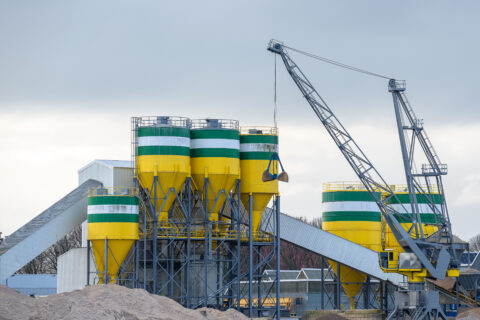
A silo is a facility intended mainly for storing bulk materials.
It usually has a vertical cylindrical structure, but rectangular, horizontal, and other specialised designs also exist.
Silos are used to store:
- Cement and dry building mixes.
- Grain and animal feed.
- Plastic granules.
- Mineral powder materials.
- Other dry bulk raw materials.
Depending on its purpose, a silo may include a pneumatic filling system, air filtration, level measurement, and controlled discharge.
Its main role is to keep a material reserve and allow organised feeding into production.
What is a bunker?
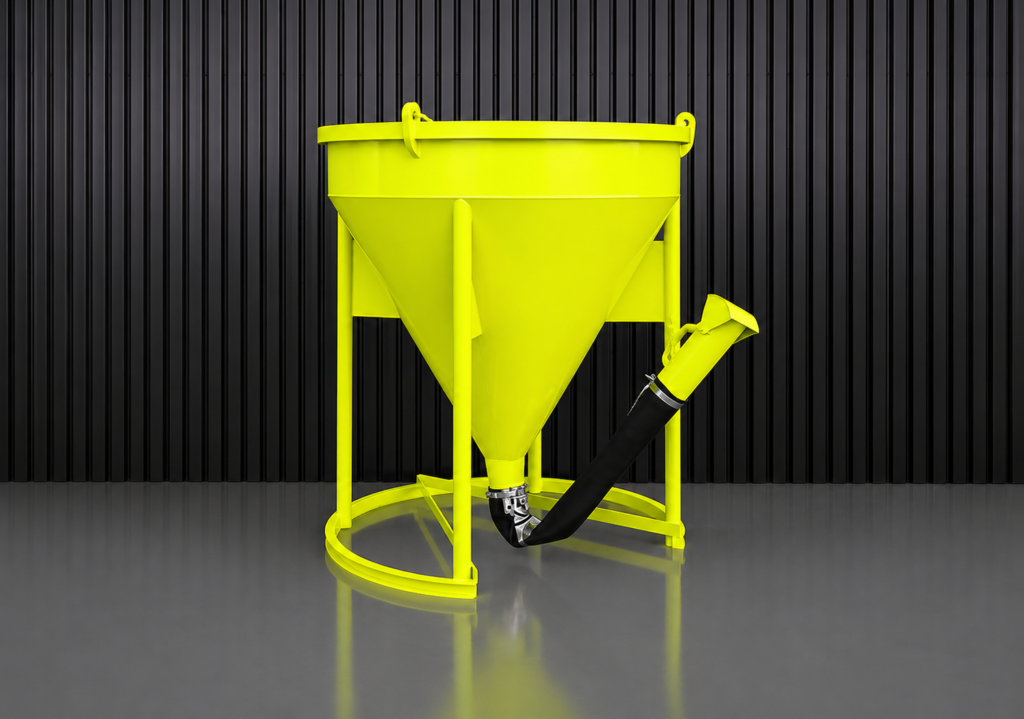
A bunker is a facility that often serves for temporary storage, receiving, or metered feeding of bulk materials.
It usually has sloping walls or a funnel-shaped lower section that help the material move towards the outlet.
Bunkers are widely used in:
- Concrete batching plants.
- Crushing and screening plants.
- Production lines.
- Mining and quarry operations.
- Raw-material dosing systems.
In many production setups the bunker is an intermediate link between storage and the next process step.
What is the main difference?
| Characteristic | Silo | Bunker |
|---|---|---|
| Main function | Material storage | Receiving, buffering, and feeding |
| Typical capacity | Often larger | Often smaller |
| Shape | Often tall and cylindrical | Often with sloping walls |
| Operation | Building a reserve | Feeding a process |
| Application | Cement, grain, granules | Sand, gravel, ore, granules |
The difference is not absolute. There are large bunkers for longer-term storage, as well as small silos that feed material directly into a production line.
Can a bunker and a silo work together?
Yes. In many industrial plants they are part of one shared system.
For example, in concrete production cement may be stored in a silo, while sand and gravel sit in separate bunkers.
When the production cycle starts, the required quantities are fed to the dosing system and then to the mixer.
That way each material is stored and handled according to its physical characteristics.
How do you choose the right facility?
Before buying, several questions need clear answers.
What material will be stored? What quantity is needed? How often will the facility be filled? What discharge rate is required?
Moisture, bulk density, tendency to stick, and how the material moves inside the facility are especially important.
Wrong geometry can lead to blockages, uneven feeding, and production stoppages.
More practical criteria for choosing a silo are also covered in How to choose a silo: 7 important things before ordering.
TETRAX offers solutions for storing and handling bulk materials, including concrete silos matched to specific production requirements.
Because efficient production starts with the right management of raw materials.